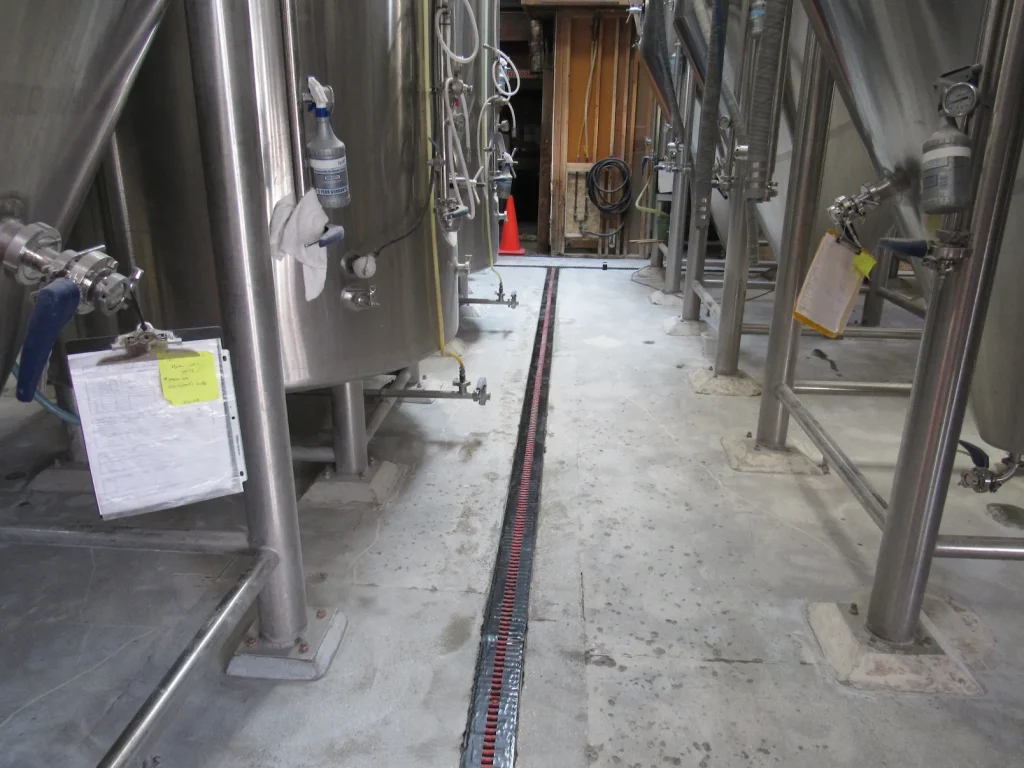
Why FDA-compliant flooring matters
The FDA regulates the safety and cleanliness of facilities that produce food, beverages, pharmaceuticals, and medical devices. Flooring is one of the most heavily inspected surfaces in any of these plants — and a non-compliant floor can shut a line down.
Compliant floors are seamless, non-porous, easy to sanitize, and chemically inert against the cleaners, brines, sugars, acids, and process chemistries used daily.
Epoxy vs. urethane: which is right for your facility?
Both epoxy and polyurethane (urethane cement) systems can be FDA-compliant, but each has trade-offs. Epoxy is a great fit for dry processing, packaging, warehousing, and high-traffic commercial kitchens. Urethane cement is the gold standard for wet, hot, and chemically aggressive environments — breweries, dairies, meat processing.
- ›Epoxy: economical, decorative options, excellent in dry / moderate-temperature areas
- ›Urethane cement: thermal-shock-rated to 250°F+, withstands daily caustic washdown
- ›Both: USDA / FDA capable when specified with the right topcoat and cove base
Specifying the right system
The right floor depends on your environment, your cleaning protocol, your inspection schedule, and your downtime budget. Talk to a coatings contractor who has actually installed these systems in similar facilities — not just sold them.